


Rhodes Through the Ages
The 2nd c. e.g. Rhodes became an ally of Rome and a little later part of the Roman Empire. In 57 AD Saint Paul visited the island and spread Christianity to its inhabitants. When the Roman Empire was divided in 395 AD, Rhodes was included in the Byzantine Empire. In 1309, the Knights of the Order of Saint John settled on the island and gave the city a series of magnificent buildings, protected by an impressive fortification wall.
In 1522 the Dodecanese became the property of the Ottoman Empire until 1912, when they came under the possession of the Italians.
The Treaty of Paris ended the occupation and in March 1948 the islands were annexed to the rest of Greece.

Old Town
The old town of Rhodes is the oldest inhabited medieval town in Europe. It has several magnificent gates and towers, and is striking as an example of a completely intact medieval structure.
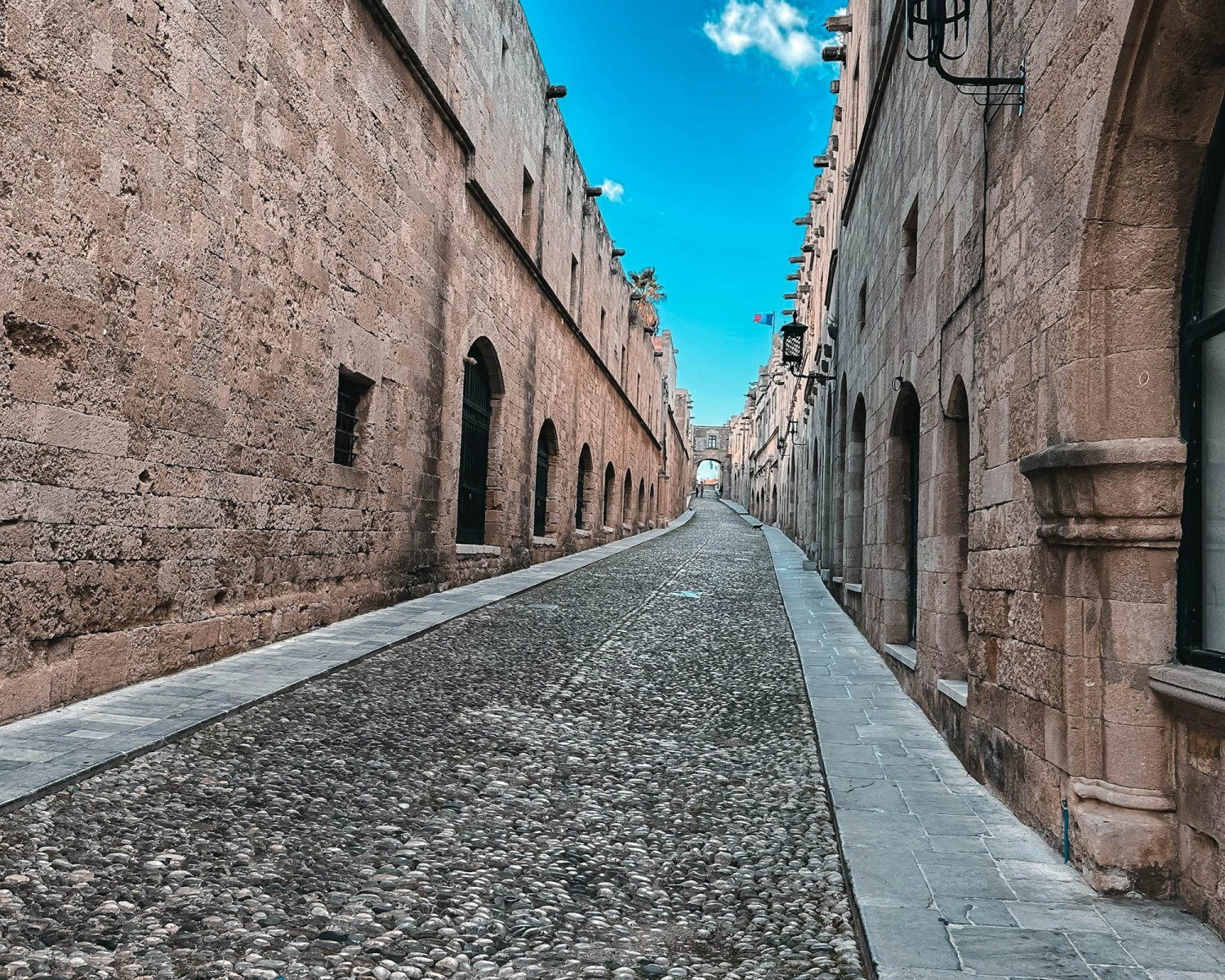
As we cross one of the most famous gates, Pyli Eleftherias (Gate of Liberty), we arrive at Simi Square, where we encounter remains of the Temple of Venus (3rd century BC), the Museum of Decorative Arts and the Byzantine Museum. Simi Square is also home to the Municipal Art Gallery, a part of the Modern Greek Art Museum of Rhodes. Next to it is the first hospital of the Knights, built by the Grand Master in 1440, which now houses the Library of the Archeological Society. In the monumental building of the Knights’ new hospital the Archaeological Museum was created in 1916. It includes collections of coins, pots and sculptures from the Mycenaean up to the Roman era. Walking through the gate we reach Ippoton Street, that is the Street of the Knights, one of the best preserved and most delightful medieval relics in the world. The 600m long, cobble-paved street was constructed over an ancient pathway from the New Hospital - Archaeological Museum to the Grand Master's Palace.
The Grand Master’s Palace or the Castello was built in the 14th century, destroyed in 1856 and rebuilt in 1339 by the Italians. Its floors are covered with ancient mosaics from the island of Kos. It includes an interesting collection of 16th and 17th-century Western furniture and an impressive arcade used as a majestic entrance.
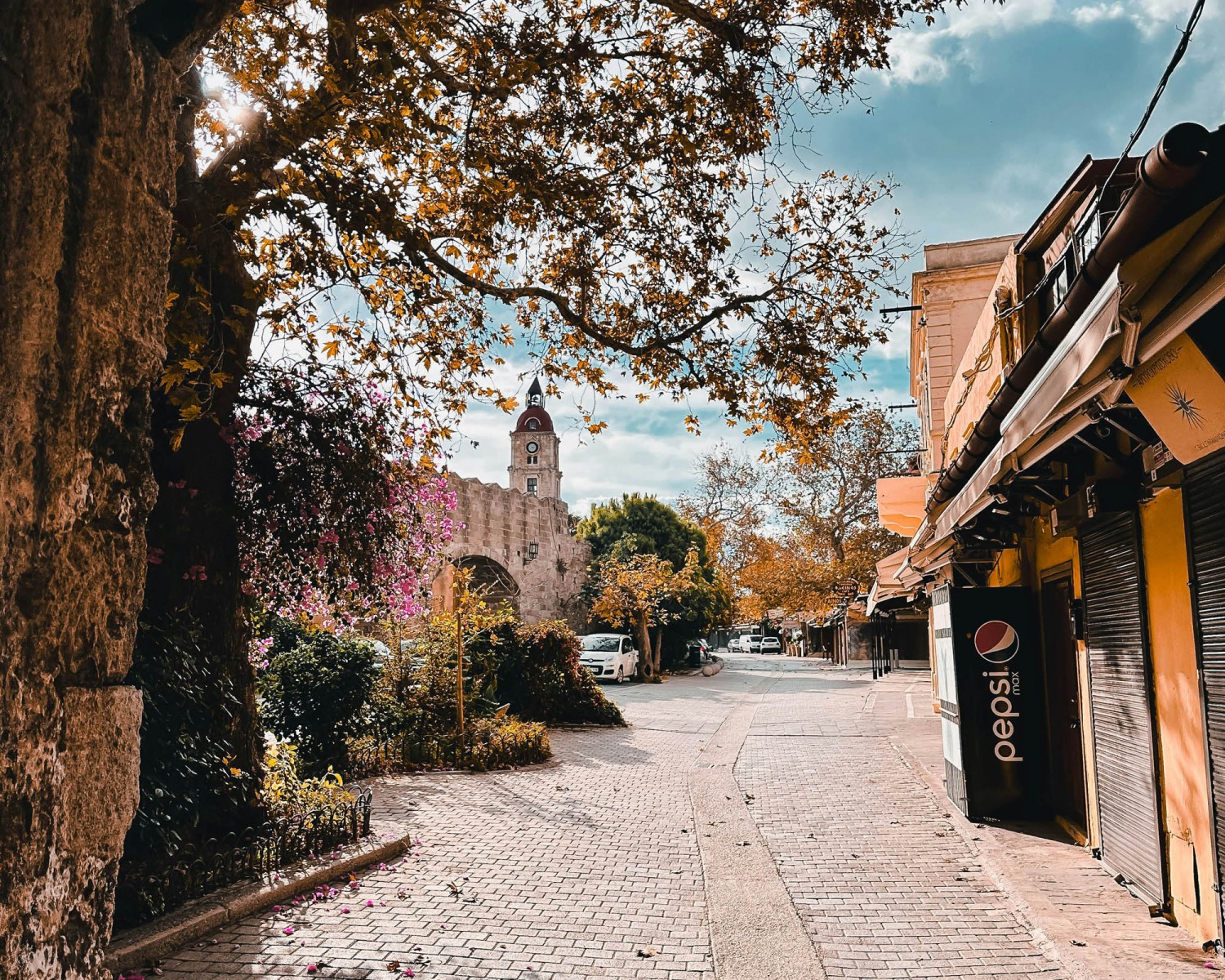
Other remarkable sights of the old town are the Mosque of Soleiman, Agios Dimitrios Church, the Clock Tower, St. Catherine's Hospice and the Turkish Baths in Arionos Square. Orfeos Street is a wide road with tourist shops and restaurants which meets Socratous street, another main shopping street, that leads to Ippokratous Square. Nearby is the Jewish District: the square of the Hebrew Martyrs, the Synagogue and the Jewish Museum.
The walls of the city were a work in progress for the 200 years the Knights ruled the island. The length of the walls is about 4 kilometers, while the external area is a green park of trees and flowers.

New Town
The modern part of the city is famous for its restaurants and bars. There are also quite a few noticeable landmarks to admire. Mandraki Harbour is a beautiful marina full of luxury yachts from all over the world. The entrance of the port is adorned by the statues of a male and female deer (Elafos and Elafina), symbols of the island. Nearby on the mole stands the lighthouse tower of St Nicholas and the well-known three windmills. Numerous monumental buildings surround Mandraki, reminding of the Italian presence on the island: the Prefecture, the National Theater, the Court, the Post Office, the City Hall, the Church of Evangelismos (Annunciation Church) and the Murad Reis Mosque. Walking to the north we reach the outstanding Casino of Rhodes and the charming Aquarium.
The ancient Acropolis stands on the eastern side of the Monte Smith hill, overlooking the city. Further on one sees the Stadium (3rd century BC) and the Odeum (both rebuilt). There are also a few ruins of the Temples of Athena, Apollo and Zeus.

Greek Beauty and Hidden Coastal Gems
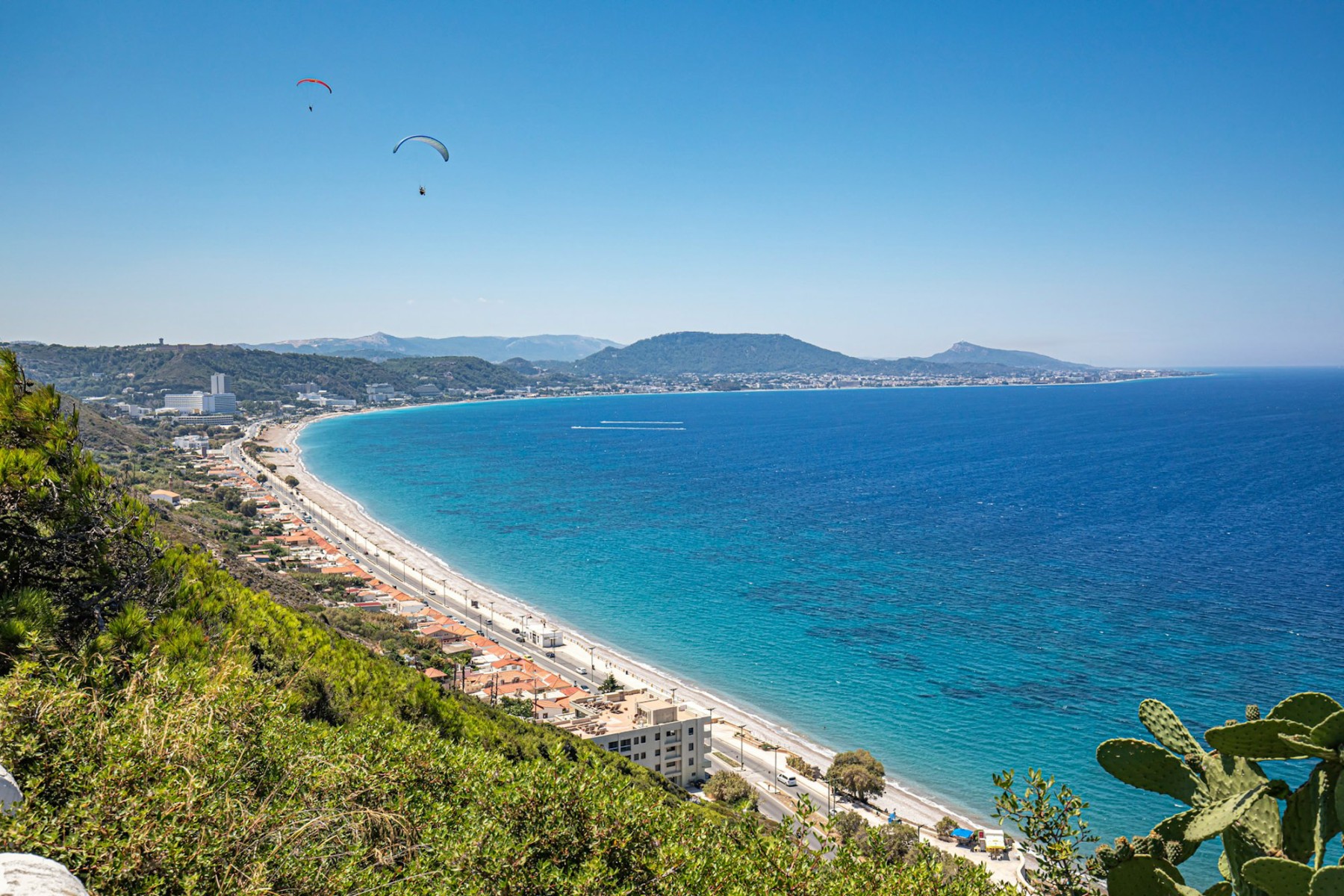
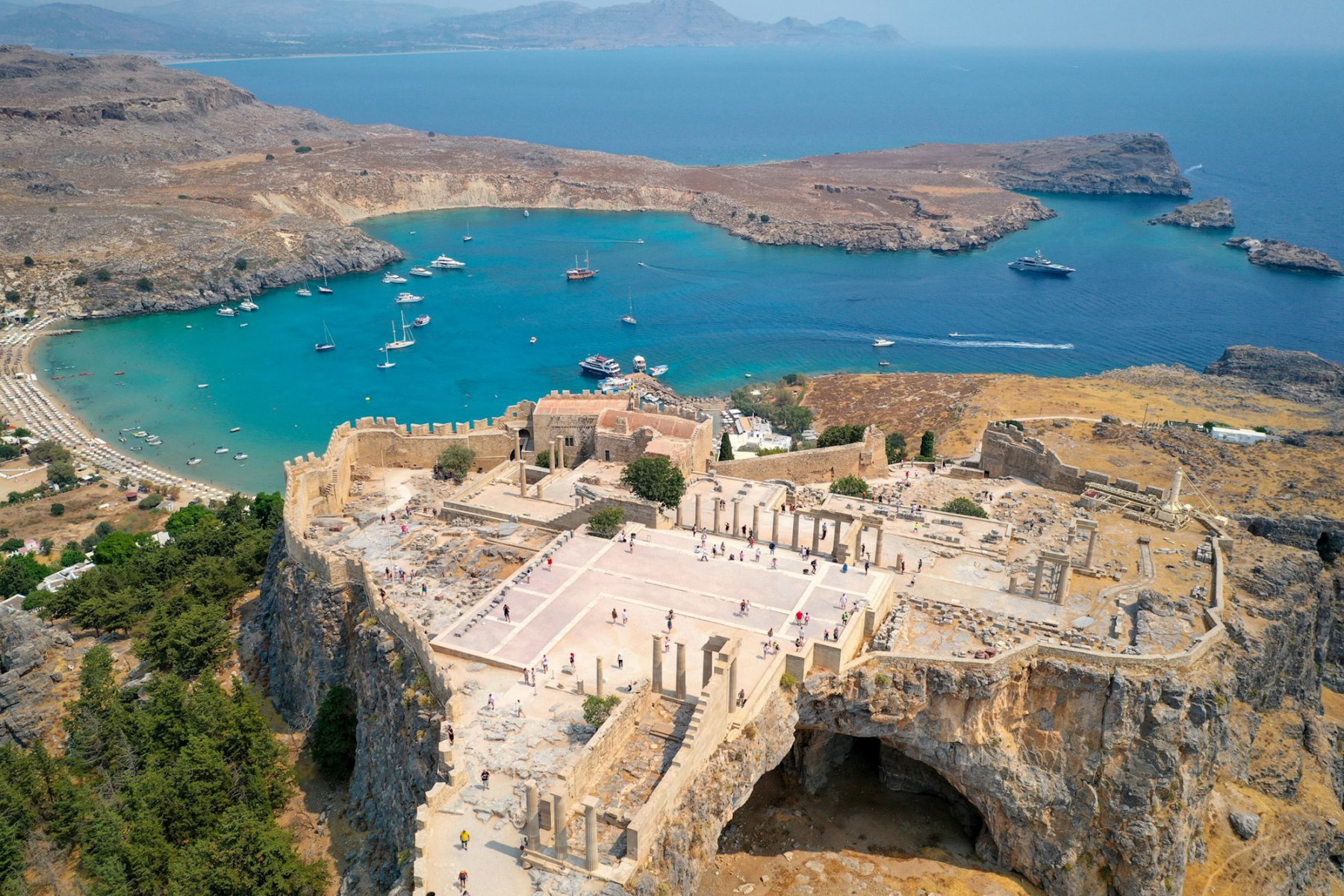
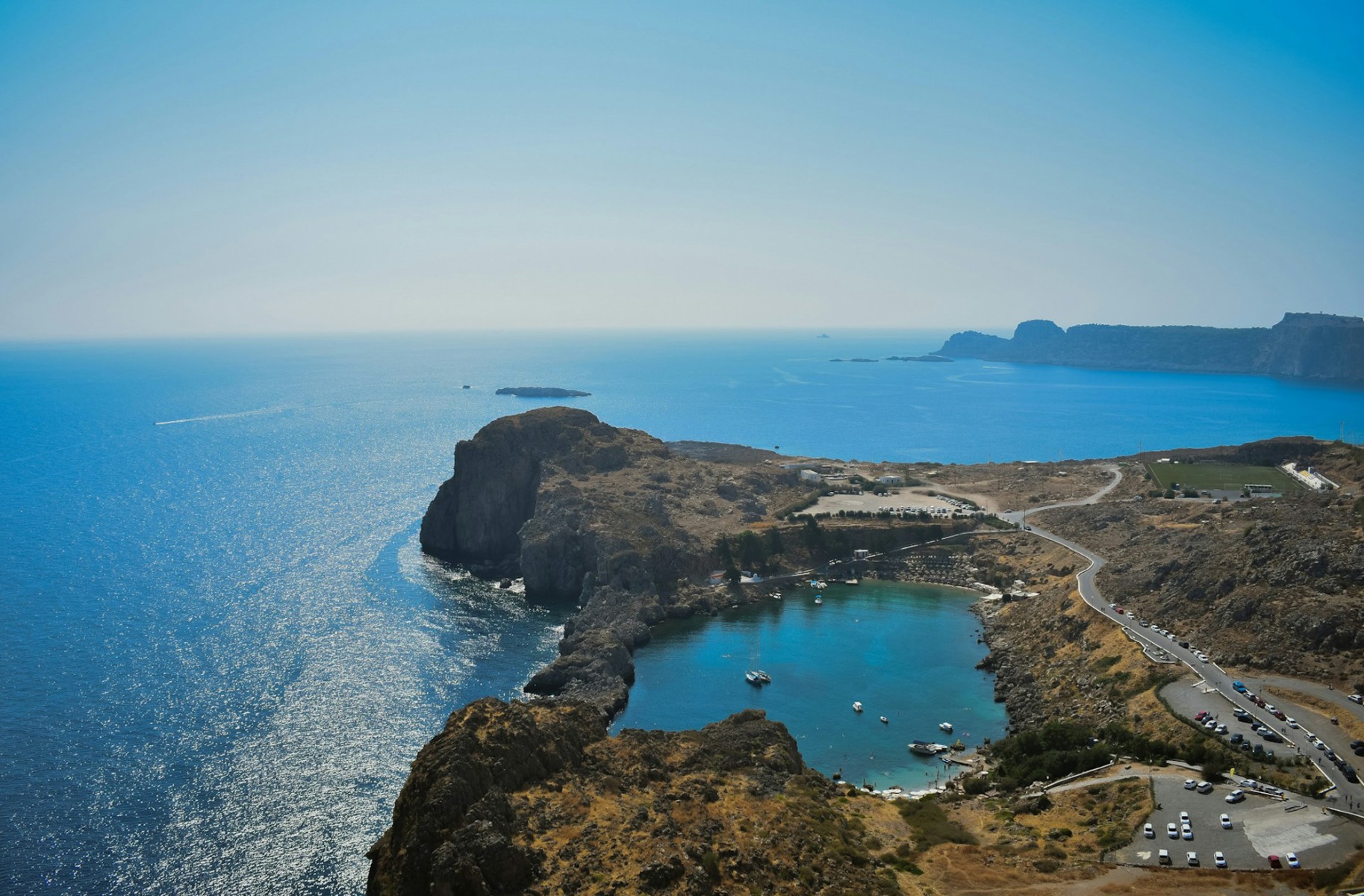
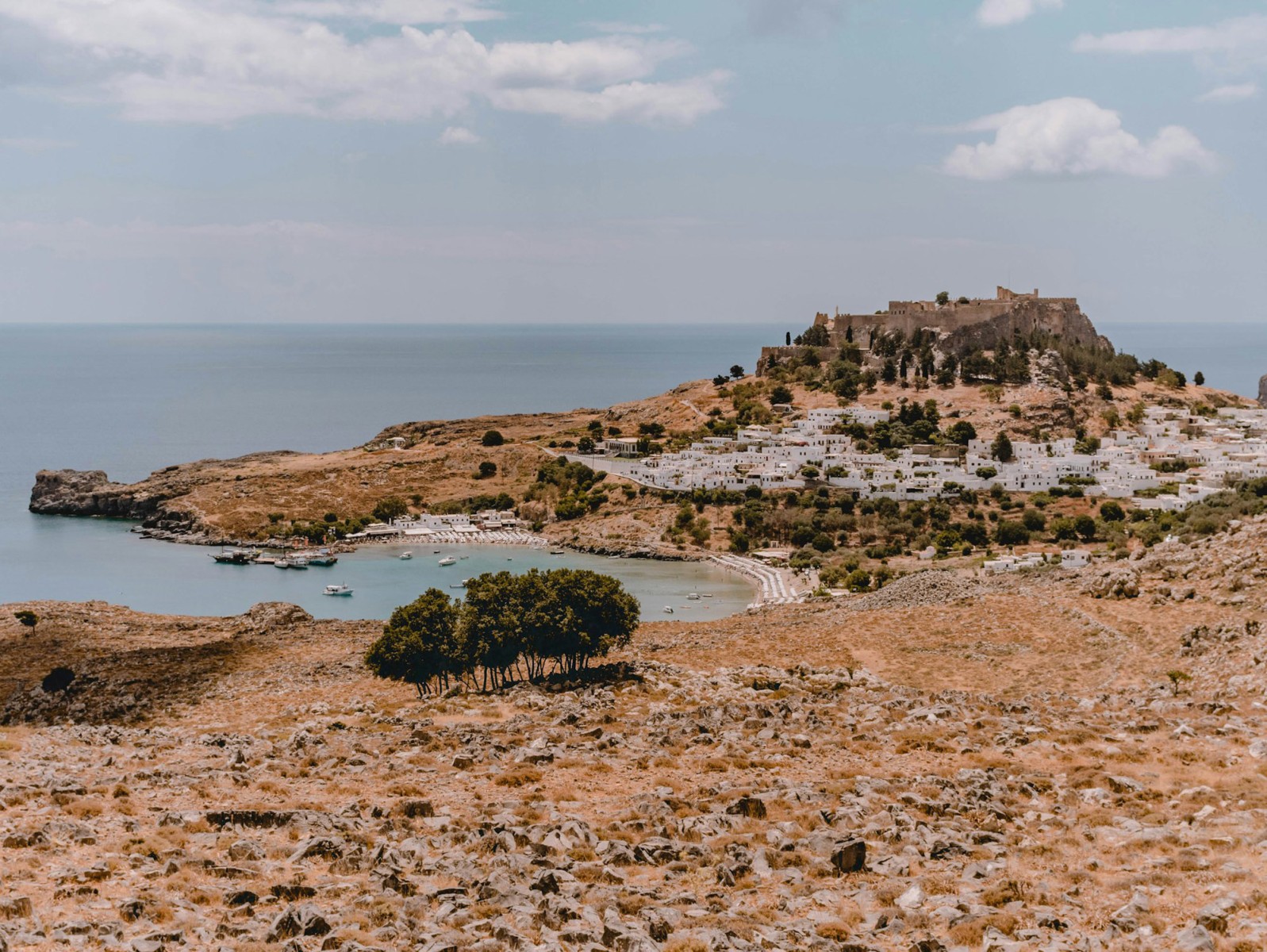
Tsambika is a long sandy coast but also a mountain, with a Virgin Mary monastery on its top. Archangelos (29 km) is noteworthy for its beautiful traditional houses, ceramics and carpet workshops. Haraki, a charming fishing village, lies on the beginning of a marvelous coast and includes the medieval castle of Faraklos. Lindos (47km) is the must-see village with the Greek blue-white architecture style, the pebbled courtyards, a lovely central beach and the magic little bay of St. Paul.

Journey Through Rhodos
Ancient Kamiros is of a great archeological importance. It doesn’t have neither a castle nor an acropolis. We can see remnants of houses, of temples and of an aqueduct. Kritinia village is famous for its Venetian castle, built in the 16th century and Siana village for its old, stone houses. The last stop would be Monolithos village, where one can admire the imposing castle of 236m height, built on the foundations of another older castle.